
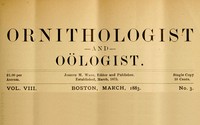
The Ornithologist and Oölogist. Vol. VIII No. 3, March 1883 by Various
Let's be clear from the start: this isn't a book with a plot. 'The Ornithologist and Oölogist, Vol. VIII No. 3, March 1883' is a scanned artifact, a single monthly issue of a specialist magazine for bird and egg enthusiasts from the Victorian era. There's no main character, unless you count the collective voice of the contributors—amateur naturalists, dedicated hobbyists, and a few professionals scattered across America and beyond.
The Story
There is no traditional narrative. Instead, you open the pages to find a snapshot of a scientific community conversing through the mail. The 'story' is the exchange of knowledge. One section lists bird sightings from correspondents ("Mr. J. A. C. in Iowa reports an early Robin on March 2nd"). Another provides meticulous, almost poetic, descriptions of bird eggs (their color, speckling, and dimensions). There are short articles with titles like "Habits of the Black-capped Chickadee" and practical advice on how to blow out an egg without breaking it. You might find a query from a reader asking for help identifying a strange nest, followed in a later issue by replies from others. The drama is quiet: it's in the discovery of a rare species, the debate over a classification, or the simple recording of a migration pattern.
Why You Should Read It
I loved this for its pure, unfiltered sincerity. These writers aren't trying to sell you anything or build a dramatic arc. They are sharing observations with the genuine hope that it adds to a shared body of knowledge. Reading their precise notes on the shade of blue in a robin's egg feels like an act of deep respect for the natural world. In our age of instant information, there's something profoundly grounding about engaging with knowledge that was gathered slowly, locally, and with great physical effort. It redefines what we consider 'content.' This isn't entertainment; it's documentation born of passion. It made me look at the birds in my own backyard with new, wondering eyes.
Final Verdict
This is a niche read, but a rewarding one. It's perfect for history buffs, birdwatchers, or anyone fascinated by the history of science and how ordinary people contributed to it. If you enjoy primary sources and the feeling of holding a piece of the past, you'll be captivated. However, if you're looking for a flowing narrative or dramatic nonfiction, you might find it slow. Approach it like visiting a museum exhibit: dip in, read a few entries, and let the atmosphere of a bygone era of curiosity wash over you. It's a quiet, unique pleasure.
This book is widely considered to be in the public domain. Use this text in your own projects freely.
Ashley Lee
1 year agoBased on the summary, I decided to read it and the clarity of the writing makes this accessible. Don't hesitate to start reading.